
Spring Storm Season in Vancouver, WA: How to Protect Your Trees and Property Before March Winds Hit
Protect your Vancouver, WA property from spring storm damage. Learn how to identify vulnerable trees, prevent wind damage, and when to call a certified arborist. Expert tips from Ohana Tree Care.
January 2024’s ice storm brought down hundreds of trees across the Portland-Vancouver metro area. Many more remain standing but damaged—waiting for March winds to finish what winter started. Every spring, Clark County homeowners face preventable tree failures because they didn’t act before storms hit.
At Ohana Tree Care, our ISA-certified arborists respond to dozens of emergency calls each spring. We see the same patterns repeatedly: trees that showed warning signs for months finally fail, branches that should have been pruned come crashing down, and homeowners wish they’d called sooner.
This guide helps you avoid becoming one of those emergency calls.
Why Spring Storms Are Particularly Dangerous for Trees
Pacific Northwest spring storms create a perfect combination of tree-failure conditions that don’t exist at other times of year.
01
Saturated Soils Compromise Root Systems
After months of winter rain, Clark County soils reach maximum saturation by March. Tree roots sitting in waterlogged ground lose their anchoring strength. Root systems that held firm in summer can't grip saturated soil when winds push against the canopy above. This explains why seemingly healthy trees topple during spring storms while surviving stronger winds in drier months. The tree hasn't weakened—the ground holding it has.
02
Wind Events Peak in Transitional Weather
The Columbia River Gorge acts as a wind tunnel, channeling powerful gusts directly into Vancouver and surrounding communities. Homeowners in Salmon Creek, Felida, and Hazel Dell face particular exposure to Gorge winds, while properties in Camas and Washougal often see the first impact of incoming weather systems. Spring's transitional weather patterns—warm fronts colliding with lingering cold air—generate some of our strongest sustained winds. March and April wind events regularly reach 40-60 mph with gusts exceeding 70 mph in exposed areas. Trees already stressed by saturated soils face maximum wind loading at their most vulnerable moment.
03
Dormant Trees Carry Hidden Damage
Winter storms may have cracked branches, split trunks, or damaged root systems without causing immediate failure. These weakened trees appear normal but carry structural damage waiting to fail under the next significant wind event. Dead branches frozen in place all winter suddenly become projectiles when spring winds arrive.
Identifying Vulnerable Trees Before Storms Hit
Proactive assessment now prevents emergency calls later. Walk your property and examine each significant tree for these warning signs.
Structural Red Flags
Dead branches in the canopy pose the most immediate threat. Look for branches without buds while surrounding branches show spring swelling. Dead wood appears gray, lacks bark flexibility, and snaps rather than bends.
Cracks in major limbs or trunk indicate structural failure in progress. Vertical cracks along the trunk, splits where branches meet the trunk, or separation at branch unions all signal weakness that storms exploit.
Leaning trees deserve immediate attention—especially if the lean is new or progressive. Fresh lean indicates root failure already occurring. Check for heaving soil on the side opposite the lean, which confirms root plate movement.
Co-dominant stems (two trunks of equal size emerging from the same point) create weak attachment points. Look for included bark—bark pushed inward where stems meet rather than a raised ridge of connected wood. Included bark means the stems aren’t structurally connected and can split apart under load.
Root Zone Warning Signs
Mushrooms or conks at the tree base indicate decay in the root system or lower trunk. While some fungi are harmless, shelf-like conks or clusters of mushrooms warrant professional evaluation.
Heaving or cracked soil around the trunk suggests root plate instability. The tree may be slowly uprooting over time.
Recent construction or excavation near trees damages roots that won’t fail immediately but weaken trees for future storms. If you’ve had trenching, grading, or construction within the drip line of mature trees in the past 2-3 years, those trees deserve close monitoring.
Canopy Concerns
One-sided or unbalanced canopy creates uneven wind loading. Trees naturally grow toward light, but severely asymmetric crowns concentrate stress on one side of the trunk.
Dense, unpruned canopy catches more wind. Trees that haven’t been pruned in years develop thick crowns that act like sails in high winds. Proper thinning reduces wind resistance while maintaining tree health.
Multiple dead branches throughout indicate declining tree health. A few dead twigs are normal; clusters of dead branches signal systemic problems making the entire tree more vulnerable.
Storm-Proofing Actions You Can Take Now
Some preventive steps are appropriate for homeowners. Others require professional expertise to avoid causing more harm than good.
Homeowner Actions
Clear debris from around tree bases. Remove accumulated leaves, branches, and materials that trap moisture against the trunk and root flare.
Check mulch depth and placement. Mulch should be 2-4 inches deep and pulled back from direct trunk contact. Deep mulch piled against trunks promotes rot and pest problems that weaken trees.
Document your trees photographically. Take photos of each significant tree from multiple angles. This documentation helps track changes over time and proves invaluable for insurance claims if storm damage occurs.
Identify trees near targets. Note which trees could hit your house, garage, vehicles, fences, or power lines if they failed. These trees deserve priority attention.
Professional Interventions
Hazard tree assessment by an ISA-certified arborist identifies risks invisible to untrained eyes. Professionals evaluate internal decay, structural defects, root stability, and failure probability—then recommend appropriate action.
Preventive pruning removes dead wood, reduces canopy density, and eliminates structural weaknesses before storms test them. Proper pruning follows ANSI A300 standards to improve tree stability without causing damage.
Crown thinning selectively removes interior branches to reduce wind resistance. This allows wind to pass through the canopy rather than pushing against it like a solid sail. Proper thinning maintains tree health while significantly reducing storm failure risk.
Cabling and bracing provides supplemental support for trees with structural weaknesses worth preserving. Steel cables between major limbs redistribute stress during wind events, potentially extending the safe life of valuable trees.
Removal of high-risk trees is sometimes the right answer. Trees too compromised to save safely, or those positioned where failure would cause catastrophic damage, should be removed proactively rather than during emergency conditions.
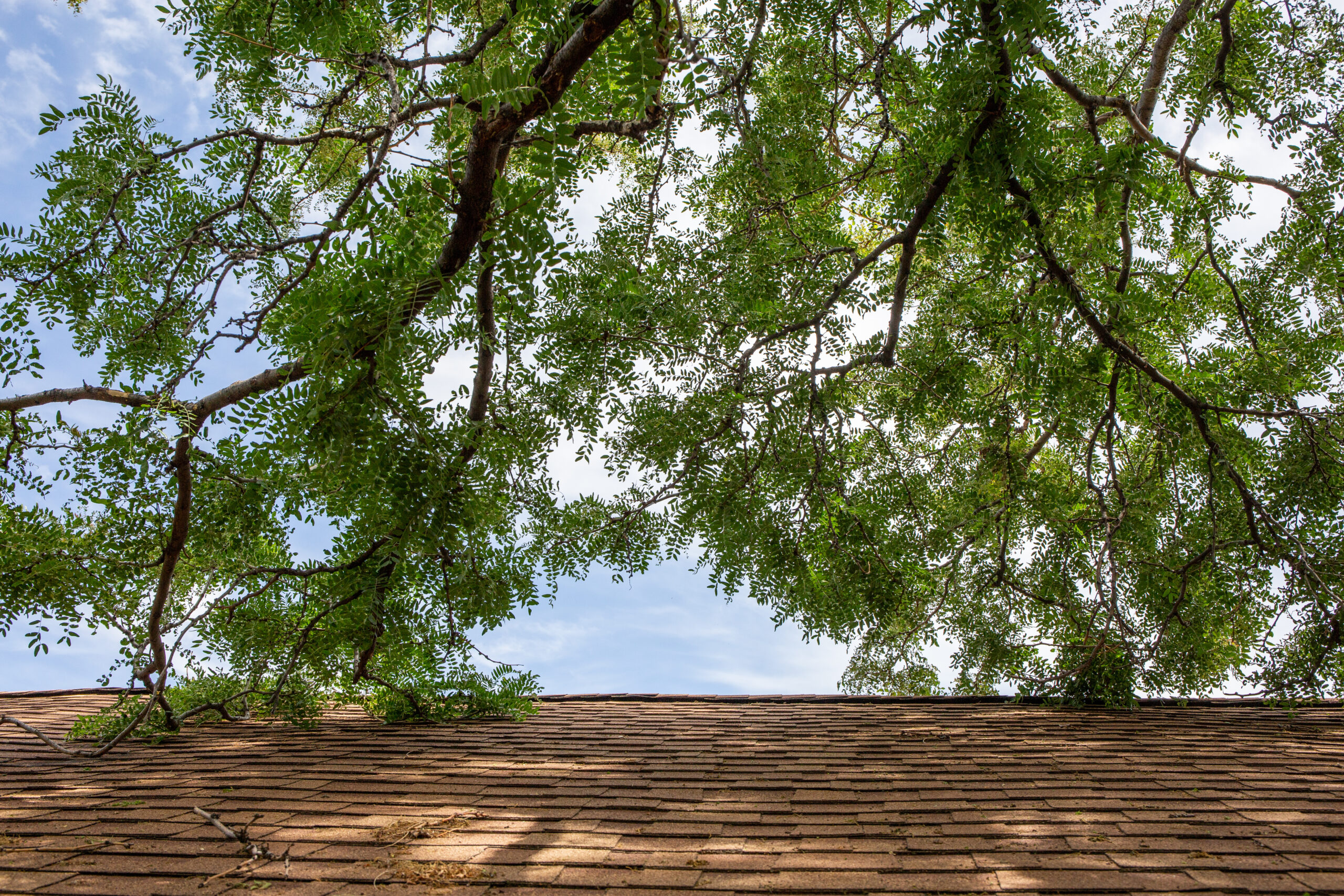
When to Call a Professional
Don’t wait for failure. Contact a certified arborist if you observe:
- Any tree leaning toward structures, vehicles, or high-use areas
- Cracks in the trunk or major branch unions
- Mushrooms, conks, or visible decay at the base
- Large dead branches in the canopy
- Trees that have lost major limbs in previous storms
- Any tree that concerns you—trust your instincts
Professional assessment costs far less than emergency removal, property repairs, or injury claims. A qualified arborist can often identify solutions that preserve valuable trees while eliminating hazards.
After the Storm: What to Do
Despite preparation, storms sometimes cause damage. Here’s how to respond safely.
Immediate Safety Priorities
Stay away from downed power lines. Any fallen tree near power lines is a life-threatening emergency. Assume all wires are live. Call your utility company and stay clear until they confirm lines are de-energized.
Don’t enter damaged structures. If a tree has struck your home, don’t go inside until a professional confirms structural safety.
Avoid standing under damaged trees. Partially failed trees often continue falling. Hanging branches can drop without warning. Keep everyone—including pets—away from damaged trees until professionals assess them.
Documentation Steps
Photograph all damage before cleanup begins. Insurance claims require documentation. Capture wide shots showing the tree and damaged property together, plus close-ups of specific damage.
Contact your insurance company promptly. Most homeowner policies cover tree damage to structures. Some cover tree removal costs. Report damage quickly to start the claims process.
Getting Professional Help
After major storms, legitimate tree services are overwhelmed with calls. This creates opportunity for unqualified operators to exploit desperate homeowners.
Avoid “storm chasers” who appear at your door unsolicited. Legitimate companies don’t need to canvass neighborhoods. These operators often lack insurance, deliver substandard work, and may disappear with deposits.
Verify insurance before authorizing work. Storm damage doesn’t suspend the need for proper coverage. Ask for current certificates of liability insurance and workers’ compensation.
Get written estimates. Even in emergencies, reputable companies provide written scope and pricing before beginning work.
Contact your regular tree service first. If you have an established relationship with a qualified arborist, they’ll prioritize existing customers over new storm-damage calls.
Ohana Tree Care: Your Storm Preparedness Partner
Don’t wait for March winds to test your trees. Ohana Tree Care provides pre-storm assessment and preventive services that protect your property before emergencies occur.
Our ISA-certified arborists evaluate your trees’ structural integrity, identify hidden hazards, and recommend appropriate action—whether that’s pruning, cabling, or in some cases, removal. We’d rather help you prevent damage than respond to it.
And if storms do cause damage, we provide 24/7 emergency response throughout Vancouver, Camas, Washougal, Battle Ground, Ridgefield, and all of Clark County. As a family-owned company, we’re your neighbors—we’ll be here before, during, and after the storm.
Schedule your pre-storm tree assessment:
Call or text: (360) 901-2950
Email: Ohanatreecarellc@gmail.com
March storms are coming. Is your property ready?
Spring Storm Tree Safety FAQs
How much does a hazard tree assessment cost?
Most reputable arborists provide assessments as part of the estimate process at no charge. If you’re concerned about specific trees, call for a consultation—there’s no obligation.
Should I prune my trees myself before storms?
Minor pruning of small, reachable branches is generally safe. However, improper pruning causes damage that increases storm vulnerability. For significant pruning or any work requiring ladders or climbing, call a professional.
How far in advance should I schedule storm preparation?
Ideally, schedule assessments and preventive work 2-4 weeks before storm season peaks. Waiting until storms are forecast means competing with emergency calls for service time.
Does insurance cover preventive tree work?
Generally no—insurance covers damage after it occurs, not prevention. However, preventive work costs far less than emergency removal plus property repairs. Consider it an investment in protecting your property.
What if a tree looks fine but I’m still worried?
Trust your instincts. Trees can have internal decay or root problems invisible from outside. Professional assessment can confirm your tree is healthy—or identify hidden problems before they cause failure.
Can a damaged tree be saved after a storm?
Sometimes. Storm-damaged trees can often recover with proper corrective pruning. Our arborists assess whether a damaged tree can be safely restored or whether removal is the better choice.
About Ohana Tree Care LLC
Ohana Tree Care LLC is a family-owned and operated tree care company serving Vancouver, WA and the surrounding metro area. With over 15 years of professional experience and ISA-certified arborists on staff, we specialize in hazardous tree assessment, emergency tree removal, pruning, and complete tree care services for residential, commercial, and HOA-managed properties. We treat every customer like family—because in Ohana, nobody gets left behind.